

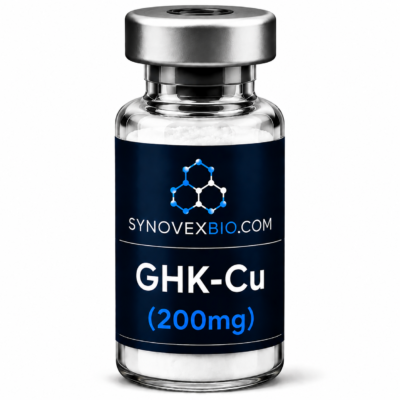
GHK-Cu (200mg)
GHK-Cu (200mg) is a highly purified copper tripeptide complex developed for advanced scientific research involving cellular signaling, peptide chemistry, copper ion biology, molecular regulation, and extracellular matrix research. Formed by the naturally occurring tripeptide Glycyl-L-Histidyl-L-Lysine (GHK) complexed with copper (II) ions, GHK-Cu represents one of the most extensively characterized copper peptides in modern peptide science. Its precisely defined molecular structure and reproducible biochemical profile have established it as a valuable research compound for academic, biotechnology, and pharmaceutical laboratories investigating peptide-mediated biological processes.
Researchers utilize GHK-Cu to investigate molecular mechanisms associated with copper transport, peptide-protein interactions, intracellular signaling, extracellular matrix regulation, gene expression, and cellular communication. Experimental studies continue to explore its involvement in copper-dependent biochemical pathways, protein regulation, enzymatic activity, oxidative stress biology, and tissue-related molecular processes. These investigations expand scientific understanding of peptide-mediated signaling networks and the fundamental biological functions of copper-binding peptides under controlled laboratory conditions.
The unique copper-binding properties of GHK-Cu (200mg) make it an important research tool for studies in molecular biology, peptide pharmacology, regenerative biology, protein chemistry, biochemistry, and biotechnology. Researchers employ this peptide to examine structure-function relationships, receptor-mediated signaling, peptide stability, and molecular interactions that contribute to the regulation of complex cellular pathways. Its well-characterized chemistry supports reliable investigations into peptide biology and advanced biochemical research.
Manufacturers produce GHK-Cu (200mg) as a high-purity, research-grade lyophilized peptide using stringent manufacturing standards and comprehensive analytical quality control. Every production batch undergoes extensive analytical testing to verify identity, purity, potency, and batch-to-batch consistency. These rigorous quality standards provide researchers with a dependable peptide suitable for reproducible experimental results across demanding laboratory applications.
Product Information
- Product Name: GHK-Cu
- Full Name: Glycyl-L-Histidyl-L-Lysine Copper Complex
- Strength: 200mg per vial
- Peptide Type: Copper-binding synthetic tripeptide
- Molecular Composition: GHK complexed with Copper (II)
- Appearance: Blue lyophilized powder
- Grade: Research grade
- Purity: High purity (Certificate of Analysis available for applicable batches)
- Intended Use: Laboratory research only
Research Applications
Researchers commonly investigate GHK-Cu (200mg) in studies involving:
- Copper peptide biology
- Cellular signaling pathways
- Peptide-protein interactions
- Molecular and cellular biology
- Gene expression research
- Extracellular matrix biology
- Biochemical pathway investigations
- Protein chemistry
- Biotechnology and pharmaceutical research
Quality Assurance
Every batch of GHK-Cu (200mg) undergoes rigorous analytical testing to verify identity, purity, potency, and consistency before release. Advanced quality assurance protocols support dependable laboratory performance, analytical accuracy, and reproducible scientific investigations across research institutions, biotechnology companies, and pharmaceutical laboratories.
Storage
Store the lyophilized peptide in a cool, dry laboratory environment protected from moisture, excessive heat, and direct light. After reconstitution, follow validated laboratory storage procedures to preserve peptide stability and maintain sample integrity throughout experimental research.
Disclaimer
GHK-Cu (200mg) is supplied exclusively for scientific and laboratory research purposes. This product is not intended for human consumption, clinical use, veterinary applications, therapeutic treatment, or diagnostic procedures. Qualified laboratory professionals should handle this research peptide in accordance with established laboratory practices, institutional protocols, and all applicable regulatory requirements.
Reviews
There are no reviews yet.